Our Vision
Cities with a high quality
of life for everyone
Our Goal
… is to bring about a just urban transition that creates a future worth living for all people. By developing strategies, sharing technical expertise and improving financing options, we are helping national governments, municipal administrations, and other urban stakeholders to make their cities liveable and socially equitable.
GOAL 1
Cities offer basic services, employment, and healthy living conditions.
GOAL 2
Cities help to bring about a just transition and thus promote sustainable economic productivity.
Goal 3
As places of production and consumption, cities integrate circular biological and technical processes.
GOAL 4
Cities actively work to reduce poverty and inequality, and advance gender equality.
GOAL 5
Cities posses green, polycentric, dense and socially mixed structures.
GOAL 6
Cities enable everyone to participate in society and political life, and they foster diversity and inclusion.
GOAL 7
Cities are climate-neutral resource-efficient, and they contribute to the conversation of biodiversity.
GOAL 8
Cities leverage the opportunities afforded by the digital transformation for administrative and innovative ends consistent with the Principles for Digital Development.
Goal 1
Cities offer basic services, employment, and healthy living conditions.
Goal 2
Cities help to bring about a just transition and thus promote sustainable economic productivity.
Goal 3
As places of production and consumption, cities integrate circular biological and technical processes.
Goal 4
Cities actively work to reduce poverty and inequality, and advance gender equality.
Goal 5
Cities posses green, polycentric, dense and socially mixed structures.
Goal 6
Cities enable everyone to participate in society and political life, and they foster diversity and inclusion.
Goal 7
Cities are climate-neutral resource-efficient, and they contribute to the conversation of biodiversity.
Goal 8
Cities leverage the opportunities afforded by the digital transformation for administrative and innovative ends consistent with the Principles for Digital Development.
TRANSITIONS in Action
© Unsplash/Stephen Wei
With our vision of cities with a high quality of life for everyone in mind, we continue to work together with partner countries on the sustainable development of our key urban sectors: construction, mobility, water, as well as waste and circular economy. In doing so, we follow the principle of “leave no one behind” and “leave no place behind”: no person, no neighbourhood in a city and no place worldwide should be left behind.
Everyone should participate in a Just Transition. We are building on previous successes – check out our initiatives and those of our partners:
City WORKS
A web-based toolkit designed to support the implementation of global agendas at the local level.
Cities CHALLENGE
The ideas competition – Implementation of Urban Living Labs to identify integrated and local urban solutions.
Tumi
Climate-friendly, inclusive, safe and affordable mobility in cities.
PREVENT
Together for a circular economy. The think and do tank’ for circular economy.
C40 Cities Finance Facility
The C40 Cities Finance Facility (CFF) works with partners to help cities in the Global South develop financing solutions.
URBANET
© Flickr/Maks Karochkin
URBANET is a weblog that promotes international dialogue on sustainable urban development. The weblog offers a platform for experts around the globe to exchange knowledge and experiences and provides insight into topics such as decentralisation, just transition and reducing inequalities.
Gender-Inclusive E-Bus DepotsIndia Bus Depots
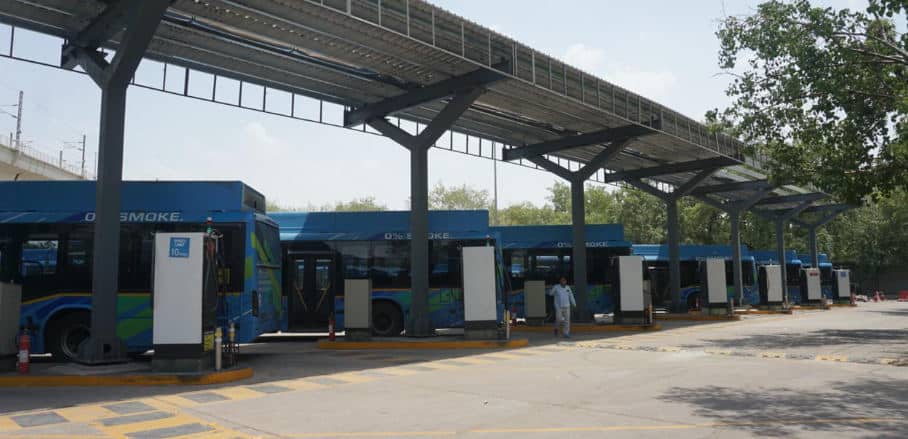
As India moves towards electrification of public buses, there’s an op- ...
Sonal Shah & Manisha Sharma
Risk and Crisis Management Risk and Crisis
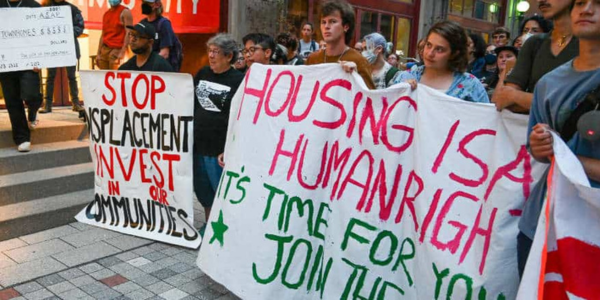
The Global Housing Crisis: A Crisis Unlike Any Other. Echoes of the ...
Kirsten McRae
ICLEI World Congress 2024 ICLEI World Congress
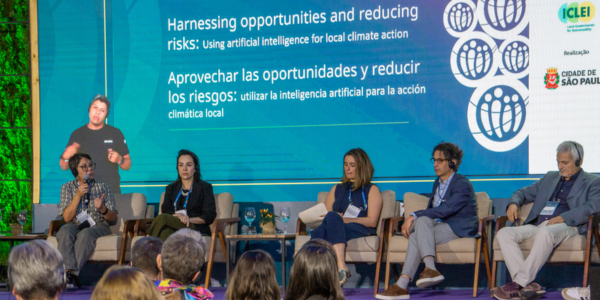
Harnessing Opportunities and Reducing Risks: Using Artificial Intelligence ...
Nidhi Misra
Sustainable Building PracticesNew
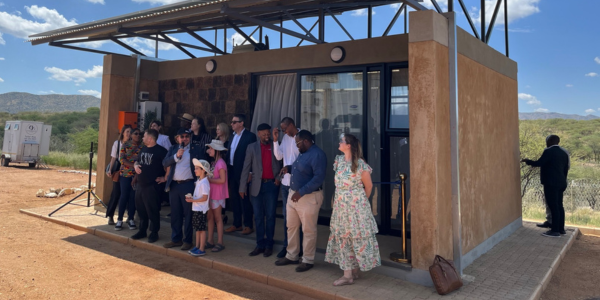
Mushrooming Solutions: How Mycelium is Cementing an Eco- ...
Alexander Jachnow
Resource Hub
© Flickr/lets.book
The Federal Ministry of Economic Cooperation and Development (BMZ) and its partners create knowledge products on a wide range of topics within sustainable urban development, including case studies, factsheets, technical manuals, and videos.
BMZ Position Paper: Sustainable urban development
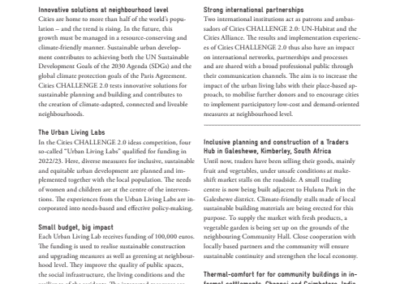
Factsheet Cities Challenge
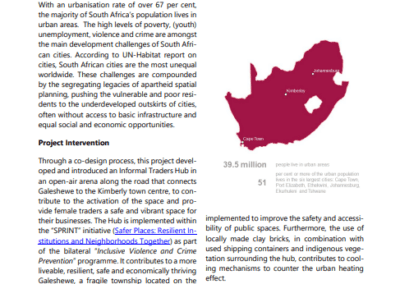
Factsheet Cities CHALLENGE South Africa
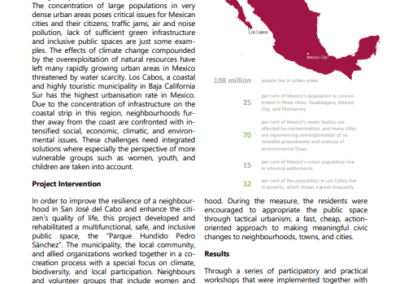
Factsheet Cities CHALLENGE Mexico
Events
© GIZ/Jan Rottler
To raise awareness of the relevance of sustainable urban development among a broader public audience, the German Federal Ministry for Economic Cooperation and Development (BMZ) is represented at key national and international events.
Past Events – Worth Revisiting
Urban October 2023
September 28th – Oktober 30th, 2023
Check out our activities during the previous Urban October.
World Urban Forum 2022
The German Pavilion
June 26th – 30th, 2022
Check out event recordings and impressions from the World Urban Forum 11 in Katowice.